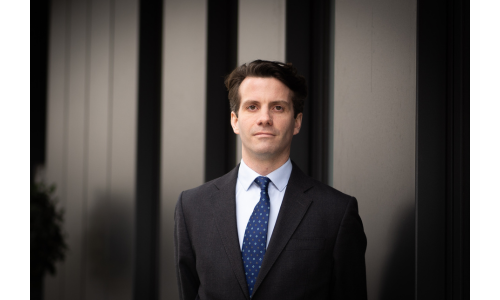
Deputy Chief Investment Officer, Cranley Macfarlane provides a commentary on some of the macro themes that are front of mind for investors in the early stages of 2026.
“Past performance is not a reliable indicator of future returns”.
This is the disclaimer that accompanies all investment marketing literature. It is also demonstrably true. The world is constantly changing, so are economies, and so are markets. What has gone before will not necessarily do so again.
Yet the issue for investors is that past performance is all we have to go on. A successful CEO is judged to be successful because of their past results, not because of what they say the future will look like. Daniel Kahnemann won a Nobel Prize for his work on heuristics, the shortcuts that our brains take when making decisions. Looking at the past is one of these shortcuts that helps us to feel that we can predict the future.
That is why it is so disconcerting when the past seems increasingly irrelevant. And right now, one would be forgiven for thinking that.
The actions of Donald Trump in his second term as US President should not be a surprise. It was said before he took office that this time he knew the ropes, he did not need establishment figures like Jeff Sessions, Rex Tillerson and General Jim Mattiss restraining him. Second time round he has surrounded himself with ‘yes men’. As a result, we have had a slew of policies that are a sharp deviation from the past 70 years – whether that is indiscriminately raising tariffs, intimidating NATO allies or threatening the Federal Reserve’s independence.
Yet just because many of his policies are drastic changes from the current norms, it does not mean they are wholly without merit or precedent. It is not difficult to draw comparisons between Venezuela and Iraq.
What is destabilising is the rhetoric. The excuses that are obviously false, the threats that may not be empty. But again, perhaps this is an effective way to deal with countries like China or India, who are not overly concerned by Western niceties when it comes to their own interests.
Trump as president may be making the world more uncertain, but is he making it un-investable? Of course not.
Every investment decision we make boils down to whether we think the current trend continues or changes course. The past is a vital consideration. But so too is an awareness of changes that are happening. And are these changes structural or cyclical?
At the moment we have a new technology emerging that could drastically change our lives, but we do not know if for better or worse. The Federal Reserve Bank of Dallas released a study suggesting that in 20 years AI could result in the elimination of the need to work, or humanity’s extinction, or it could just add 0.2% to GDP trend growth over the long-term.
We have a US government that believes the world is one “that is governed by strength, that is governed by force, that is governed by power”. As disconcerting as it is to hear the White House using language that would not have been out of place in 1930s Europe, it seems increasingly clear that governments really will have to get real on defence.
Despite the size of the AI boom in the US, not all technology companies had a great year. With all of Trump’s shenanigans, neither did the dollar, depreciating 9% over the year. While at the index level the US market did well, around 40% of S&P 500 companies had a negative year, which was even worse for overseas investors. The US market trades at a considerable premium that has been built over years of outperformance of other markets, but it is no longer the sure thing that it once was.
Quality companies, such as CH investment fund holdings RELX and Diageo, are labelled as such because of their high return on equity, stable earnings growth and low debt levels. For these reasons, they tend to be more expensive. They have also been solidly out of favour in the past few years as investors have had their heads turned by all things AI, meaning that some trade on valuations that are detached from their underlying fundamentals.
These are a few of the examples of why there are always opportunities for investors. With opportunities come risks, but that is why the portfolios we manage are diversified across asset classes, sectors, styles and geographies. It is unrealistic not to expect portfolios to be impacted by investment fund holdings that disappoint, investment trusts that don’t meet expectations or individual companies that struggle, but the aim is to invest more in winners than losers.
Future performance cannot be guaranteed. But at a time when the world is changing at the pace that it is, a simple reliance on what has gone before is not enough.
Important Information
The contents of this article are for information purposes only and do not constitute advice or a personal recommendation. Investors are advised to seek professional advice before entering into any investment arrangements. Please note that we are not tax experts, and you should seek professional advice concerning your personal tax affairs from qualified advisers, such as tax accountants.
Please also note that the value of investments and the income you get from them may fall as well as rise, and there is no certainty that you will get back the amount of your original investment. You should also be aware that past performance may not be a reliable guide to future performance.
How would you like to share this?